Lyft Just Expanded to Europe. Here’s What That Means.
Lyft now works in 10 European countries using the Freenow and Gett networks behind the scenes. Same app, same account. Europe trips just got a little easier.
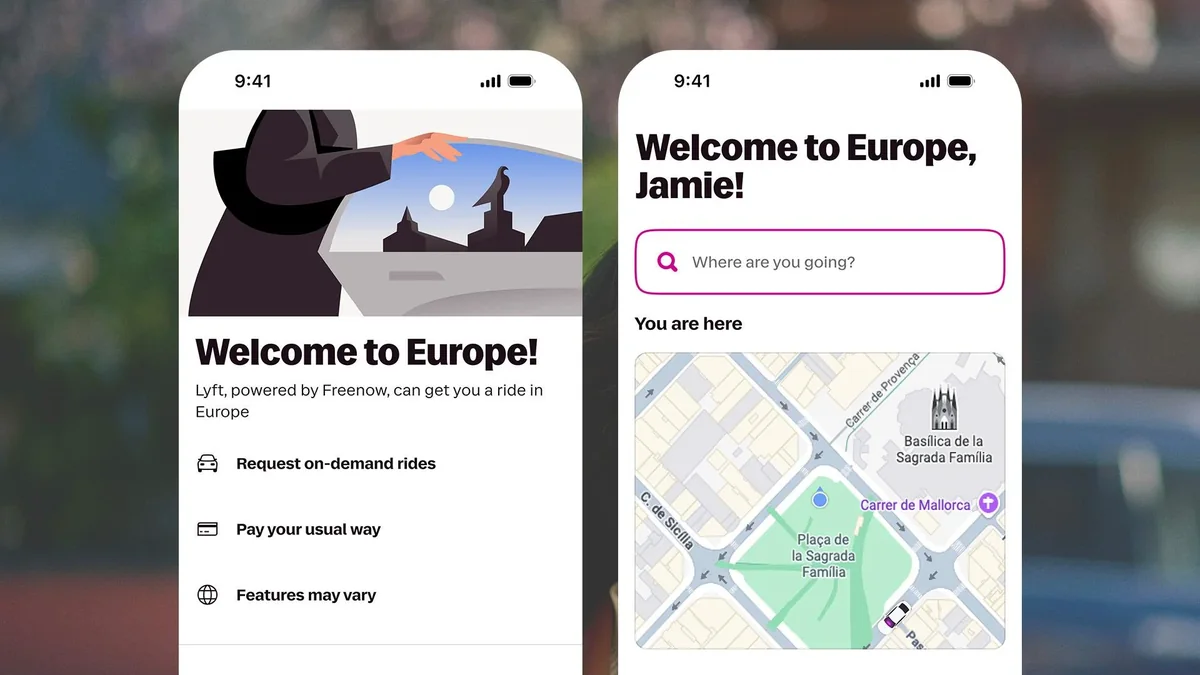
Lyft announced that North American riders can now use their Lyft app across 10 European countries starting late October 2026. Behind the scenes, Lyft is actually using Freenow and Gett infrastructure. Same app, same account, same payment methods. Here’s what it means for travelers.
Lyft announced that starting late October 2026, North American riders can use their Lyft app across a large swath of Europe. The rollout starts in Barcelona and Hamburg, expanding through London, Rome, Paris, Berlin, Athens, and Warsaw during October. By the end of the month, the Lyft app will work in 10 European countries: Spain, Italy, Greece, Poland, England, Scotland, Ireland, Austria, France, and Germany.
For North American travelers, you’ll no longer be locked into using Uber or other services during your time in Europe. Here’s what’s happening and the catch worth understanding.
The Setup
For years, if you wanted ride-share in Europe as a North American traveler, your options were:
- Uber - operates across most of Europe but has had legal battles in multiple markets
- Local apps - Freenow, Gett, Bolt, and various country-specific options
- Taxi - the traditional backup
Each required downloading new apps, creating new accounts, verifying payment methods in a new currency, and dealing with the general friction of adopting new services in a foreign country. I’ve found that local phone number requirements - or SMS codes - to be one of the biggest.
Thankfully there’s good news for Lyft users. Your existing app, account, and payment methods will now work in several European markets without any additional setup.
The Behind-the-Scenes Catch
Here’s the catch: Lyft isn’t operating directly in Europe. Instead, Lyft built new backend infrastructure that connects the Lyft app to Freenow and Gett. These are two European ride-share networks that Lyft has acquired or partnered with.
When you request a ride in Rome through your Lyft app, you’re actually getting matched with a driver through the Freenow network. You experience it as a Lyft ride through your existing app. Meanwhile the European driver experiences it as a Freenow (or Gett) requested ride.
For European riders, this doesn’t change anything. European riders will “continue using the Freenow by Lyft and Gett by Lyft apps that they know and love.” For European drivers, this adds a new source of rides - American travelers now book through Lyft rather than needing to download new apps.
How It Compares to Uber in Europe
For context on who Lyft is competing with in these markets:
Uber’s European presence is extensive but variable:
- Operates in most major cities across Western and Central Europe
- Has faced legal challenges and bans in various markets (Barcelona, parts of Germany, etc.)
- Service quality and pricing vary significantly by market
- Standard global account works everywhere Uber operates
Lyft’s new European presence:
- Available in 10 countries starting late October
- Leverages Freenow and Gett infrastructure
- Uses existing North American Lyft account and payment methods
- Provides the same app experience as domestic Lyft
Markets Where This Is Being Introduced
The initial launch cities include:
- Barcelona (early access)
- Hamburg (early access)
- London (rolling out October)
- Rome (rolling out October)
- Paris (rolling out October)
- Berlin (rolling out October)
- Athens (rolling out October)
- Warsaw (rolling out October)
These cover many of the major European cities most North American tourists visit. Combined with secondary coverage in the other named countries (Austria, Scotland, Ireland, etc.), the initial footprint is substantial.
Payment Currency
One nice detail buried in the announcement: Lyft is planning to let riders choose if they want to pay in their home currency or local currency where they took the ride.
For now, you’ll presumably pay in your home currency (USD/CAD), with Lyft handling the conversion behind the scenes. In the coming year, you’ll be able to choose. For anyone who’s paid attention to foreign exchange charges from app-based ride-share services, this is a big benefit — you’ll be able to pick the better rate and take advantage of foreign transaction benefits offered by your credit card.
The Bigger Picture
This is a well overdue update. Lyft’s expansion to Europe fits into a broader trend of travel app globalization. Instead of fragmented regional apps, consumers are increasingly expecting their domestic services to work globally.
Other than Uber, ride-share has lagged this trend. Having Lyft work in Europe closes that gap for its users.
Keep an eye on this through the rest of October. If you’re a Lyft user heading to Europe in November or later, the app will just work when you land.
Source: Lyft Blog